You checked the yard after the storm, gathered a few stray shingle pieces, saw a roofline that looked fine from the driveway, and decided it could wait. That pause is where Central Texas storm damage tends to grow from a small repair into a bigger one.
How quickly should you call a roofer after a storm?
Call the same day if water is getting into the building. If you see missing shingles, lifted flashing, or dented metal, call within a day or two. If nothing looks wrong, still book a roof inspection within a few days, before the next rain and before you decide about an insurance claim.
Key Takeaways
- Active leak: call right away and ask about emergency temporary roof tarping.
- No visible damage: schedule a free roof inspection anyway, because hail and wind damage often can't be seen from the ground.
- Photograph everything before anyone works on the roof, and ask your roofer for before-and-after photos.
- Check your policy for its claim-filing deadline, and contact your insurer once you have documentation.
- A tarp stops water temporarily. It doesn't replace a permanent repair.
Why does the clock matter more than the storm itself?
The first storm rarely ruins a roof. The next rain does, because it finds the opening the first storm created.
Water follows a path. A lifted shingle or cracked flashing lets moisture reach the decking, then the insulation, then the drywall. Wet insulation holds water against a ceiling long after the rain stops, so a stain can appear a week later in a room far from the actual breach.
Time also affects your claim. An adjuster has to separate storm damage from older wear, and a roof left open to the weather gives them room to blame later water damage on neglect. A dated inspection report with photos ties the damage to the storm.
How should you time your call?
Tie your call to the next forecast, not the calendar. If rain is coming within a day or two and your roof has any opening, you need protection now, and an estimate next week is too late.
- Water inside the building: call immediately. Contain the leak, move belongings, and ask about emergency temporary roof tarping.
- Visible damage, dry interior: call within a day or two.
- Nothing visible, but hail or high wind hit your street: schedule an inspection within a few days.
- Commercial roof with ponding water or a torn seam: call right away if tenants or inventory are exposed. Our commercial roofing team can assess the roof and explain your options in plain language.
Hail is the sneaky one. Bruised shingles and dented metal panels can leak months later. Our guide to hail damage roof repair in Austin covers what to look for.
What should you do before the roofer arrives?
Stay off the roof. Wet shingles and metal panels are slick, and a fall costs far more than any repair.
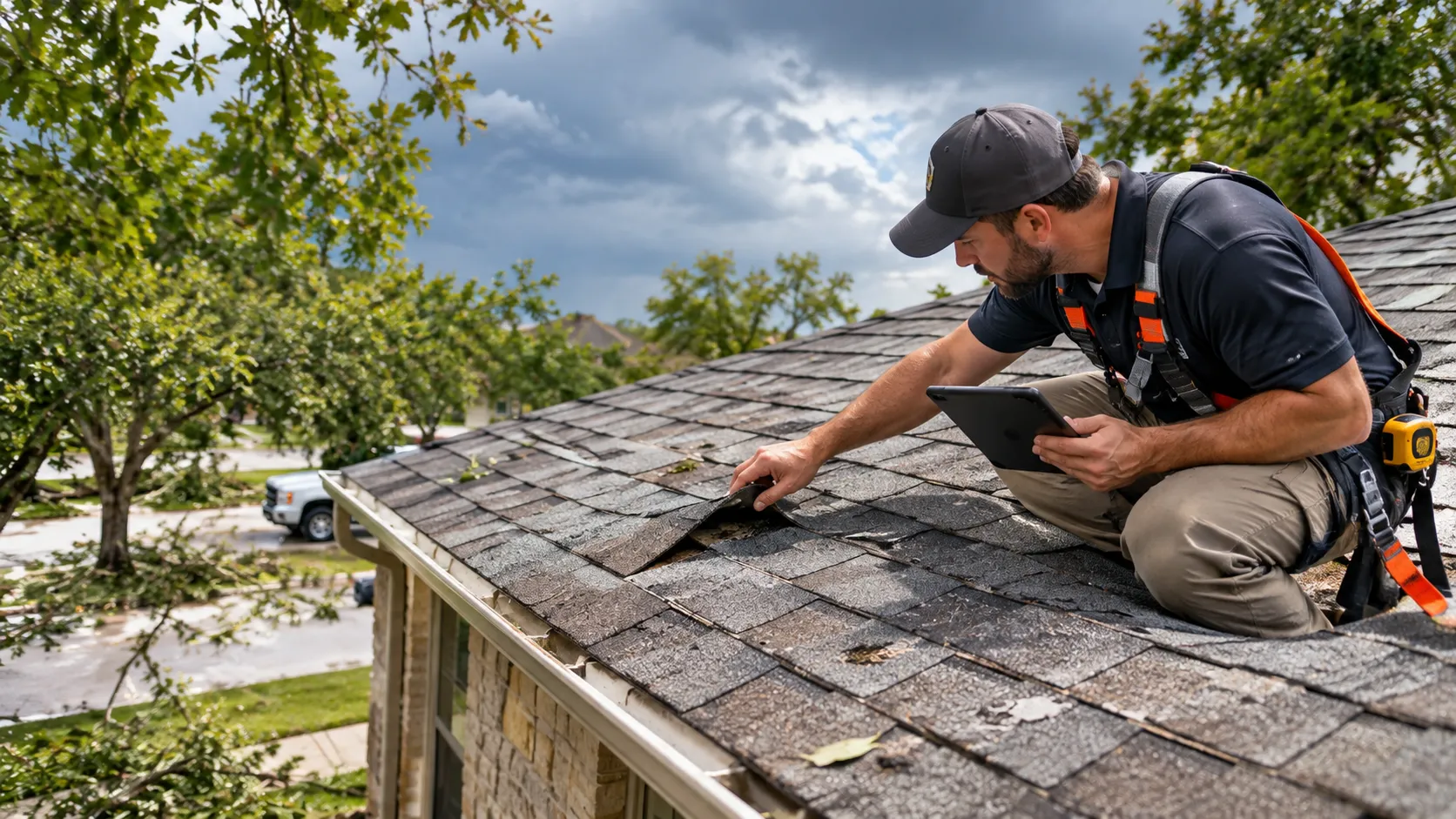
From the ground, photograph the roofline, gutters, fences, and yard debris. Inside, photograph ceiling stains and set out buckets. Write down the date and time of the storm. Those records support a claim and show the roofer what changed.
Then don't sign anything on the spot. Crews from out of town often canvass neighborhoods after big storms, and a contract signed in a hurry can commit you to work nobody has documented.
Should you call the roofer or your insurance company first?
Call the roofer first for anything urgent, then your insurer once you have documentation. Calling the insurer first feels responsible, but adjuster appointments take time, while tarping can be arranged quickly. Most policies expect you to limit further damage, though terms vary, so read yours.
Consider a typical case. A homeowner finds a stain on a bedroom ceiling after an evening storm. She calls her insurer, gets a claim number, and waits for an adjuster. Two rainy days pass with no tarp, and the stain spreads across the ceiling. A roofer call first would have capped the damage and produced inspection photos to hand the adjuster.
Roof It Pros documents findings with before-and-after photos, so your adjuster sees what you saw. Our roof inspection services are built around that kind of clear evidence. Bring your roofer in before the adjuster visit, not after the denial. The claim stays in your name throughout.
What happens after you call?
- Triage call: you describe the symptoms, and the roofer decides whether protection is needed immediately or an inspection can follow soon.
- Inspection: the roof surface, flashing, vents, gutters, and the attic or ceiling if needed. Roof It Pros offers a free roof inspection.
- Temporary protection if needed: Roof It Pros provides prompt emergency temporary tarping for leaks, storm damage, and other urgent issues. A tarp buys time. It isn't a repair.
- Written findings with photos: you decide on next steps, whether roof repair or replacement. If you're torn, this repair-or-replace guide walks through the decision.
- Claim support: the documentation goes to your adjuster.
Repair timing depends on the damage, the materials, and the weather, so any roofer promising an exact date before inspecting is guessing.
How does acting fast compare with waiting?
| Choice | What happens | Risk |
|---|---|---|
| Call Roof It Pros promptly | Documented damage, temporary tarping if needed, clear findings in plain language | Lowest: damage is capped and tied to the storm |
| Wait a week or two | Moisture spreads inside, cause gets harder to prove | Bigger repair scope, disputed claim |
| Hire a door-knocker | Rushed contract, thin documentation | Unvetted work, weak claim records |
| Climb up yourself | Photos at best | Fall injury, accidental further damage |
Waiting feels free, and it's the most expensive option on the table.
Who needs to move fastest?
This matters most if your roof is older, hail hit your neighborhood, you're planning a claim, or you manage a building where a leak affects tenants. Metal roof owners shouldn't assume panels are immune. Fasteners, seams, and dents still need a look, and our metal roof repair page explains what's involved.
A fast call doesn't guarantee a claim will be approved or that your roof needs replacing. Insurers decide coverage, and sometimes an inspection finds only minor issues. Even then, you have documented answers instead of guesses. For ongoing protection, see how often to schedule a roof inspection in Austin.
Ready to find out what the storm did?
If you're listening to rain and wondering about your ceiling, call Roof It Pros. With more than ten years in the roofing industry and a 5/5 Google rating across 80+ reviews from Austin and neighboring areas, our team can inspect your roof, tarp urgent leaks, and document everything for your insurer. Request your free inspection today.
About the Author
Brandon Miles is the CEO of Roof It Pros, a roofing company serving Austin and Central Texas. His team handles inspections, repairs, replacements, and storm damage work for homes and commercial properties, with a focus on honest guidance, quality workmanship, and responsive communication.
Frequently Asked Questions
What if my roof looks fine after the storm?
Book an inspection anyway. Hail bruising, lifted flashing, and small punctures are hard to see from the ground, and they can leak weeks later. A free inspection gives you documented answers either way.
Can a roofer tarp my roof after a storm?
Roof It Pros provides prompt emergency temporary tarping for leaks, storm damage, and other urgent issues. Availability depends on conditions and demand, so call early and describe what you're seeing.
Will tarping hurt my insurance claim?
Protecting the property from further damage is generally expected, and photos taken before and after tarping support your claim. Check your own policy for specifics.
How long do I have to file a storm damage claim?
Deadlines vary by policy, so read yours or ask your insurer directly. Don't wait to find out, because delay makes it harder to link damage to the storm.
Should I let a roofer who knocks on my door inspect my roof?
Be cautious. Ask for a business address, reviews, and written findings before agreeing to anything, and never sign a contract on the spot. A local company with a physical office, like Roof It Pros at 12711 Descartes Cove in Austin, is easier to hold accountable.
Is a commercial roof different after a storm?
The urgency is the same, but the stakes include tenants, inventory, and downtime. Flat roofs can pond water at damaged seams, so call right away if water is entering the building.
Does a free inspection mean I'm committed to a repair?
No. The inspection gives you findings and photos, and you decide what to do next. Roof It Pros explains what it found in plain language so you can choose with confidence.