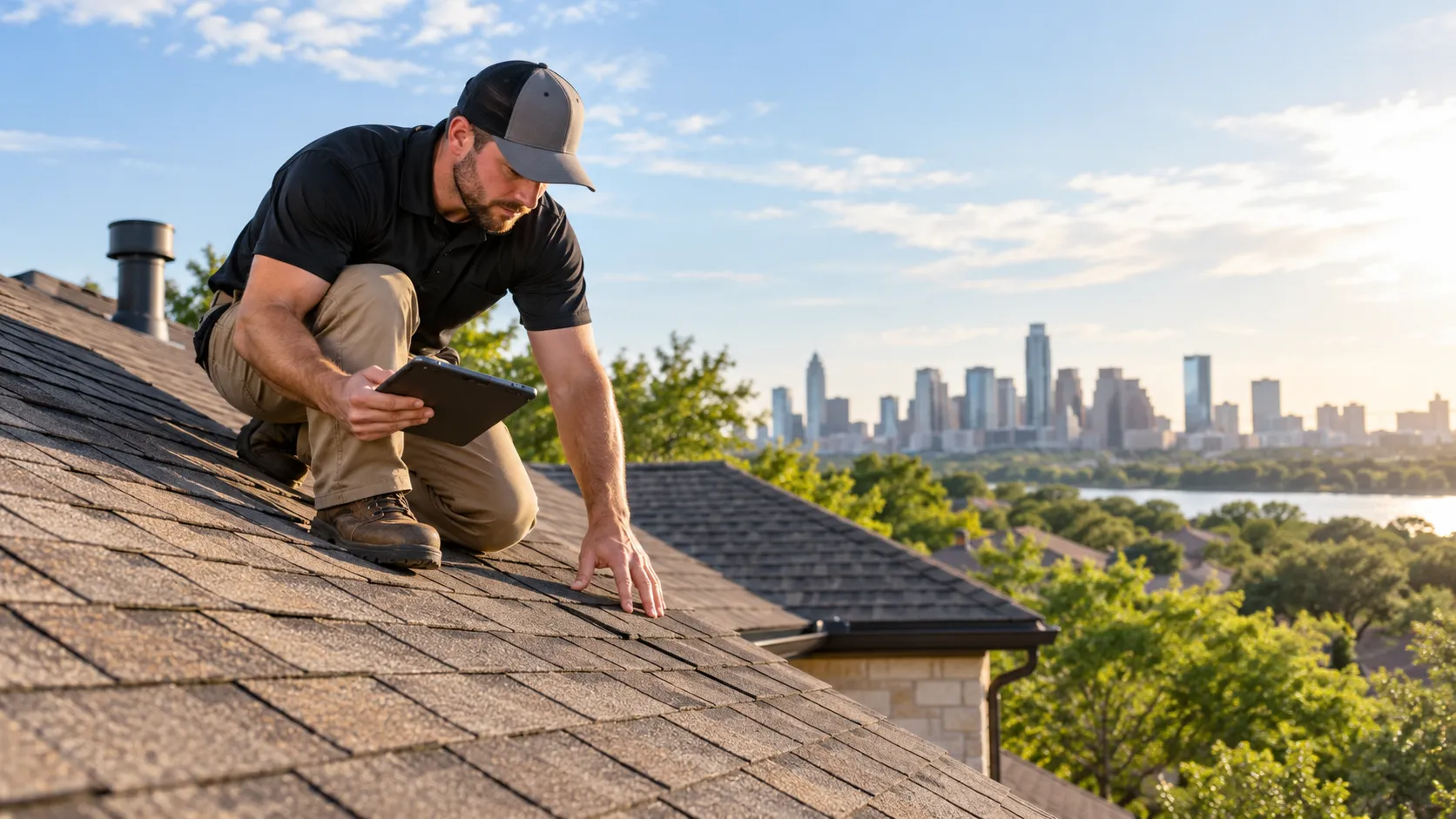
A roof can look perfectly fine from the driveway and still have damage developing beneath the surface. In Austin, Texas, where extreme summer heat, hailstorms, and strong winds put roofing systems under constant pressure, waiting for a visible leak is not the best way to determine whether your roof needs attention.
For most homeowners, scheduling a professional roof inspection at least once a year is a practical starting point. Additional inspections may be necessary after significant storms, when a roof approaches the later stages of its expected service life, or when signs of damage begin appearing.
The right schedule also depends on the type of roof you have. Asphalt shingles, standing seam metal roofing, and commercial roofing systems have different maintenance needs. Understanding those differences can help you make better decisions about roof repairs, replacement, and long-term property protection.
Roof It Pros provides free roof inspections throughout Austin, Pflugerville, and surrounding Central Texas communities, helping property owners understand their roof's condition before deciding what work is necessary.
Key Takeaways
- Annual roof inspections provide a practical maintenance baseline for most Austin homes, with additional checks after significant weather events.
- Hail, strong winds, and prolonged heat exposure can affect roofing materials even when damage is not visible from the ground.
- Older roofs may require more frequent inspections, particularly when they have a history of repairs or storm damage.
- Metal roofing and commercial roofing systems have different inspection priorities from traditional asphalt shingles.
- A professional inspection helps determine whether targeted roof repairs, preventive maintenance, or replacement should be considered.
- Roof It Pros offers free roof inspections with no obligation to proceed with repairs.
Why Annual Roof Inspections Matter in Austin
Central Texas weather creates conditions that can gradually weaken roofing systems.
During the summer, prolonged heat and ultraviolet exposure affect shingles, sealants, and other roofing components. Seasonal temperature changes cause materials to expand and contract, while thunderstorms introduce wind-driven rain, hail, and sudden drainage demands.
Over time, these conditions can contribute to loose flashing, deteriorating sealants, damaged shingles, and other vulnerabilities.
The challenge is that many roofing problems develop gradually.
A homeowner may notice no interior water damage even when flashing has begun separating around a chimney or roofing materials have been affected by previous storms. By the time water reaches a ceiling, the underlying issue may have existed for some time.
Annual inspections help identify these conditions earlier.
A roofing contractor can examine the visible condition of the roof, evaluate areas vulnerable to water intrusion, and recommend maintenance when appropriate.
For homeowners searching for a roofing contractor in Austin, TX, an inspection is also an opportunity to understand the roof's current condition before committing to repairs or replacement.
The purpose is not to assume that every roof needs work. It is to establish whether the existing system is functioning properly and identify any concerns that deserve attention.
When Should You Schedule a Roof Inspection?
Although an annual inspection is a useful baseline, certain conditions justify scheduling an additional evaluation.
| Roof Condition or Situation | Recommended Inspection Timing | What the Inspection Evaluates |
|---|---|---|
| Routine residential maintenance | Approximately once per year | General wear, flashing, shingles, drainage |
| Significant hailstorm | Promptly after the storm | Impact damage, compromised roofing materials |
| Strong winds or severe weather | After suspected damage | Loose shingles, displaced flashing, roof penetrations |
| Aging roofing system | Consider more frequent inspections | Material deterioration and remaining serviceability |
| Visible roof leak or interior staining | As soon as practical | Water entry points and affected materials |
| Recent roof repairs | According to repair scope and contractor guidance | Repair condition and surrounding roof components |
| Buying or selling a property | Before closing | Existing damage and potential maintenance needs |
| Commercial roofing system | Often twice yearly, plus after major storms | Membranes, seams, drainage, rooftop penetrations |
These are general maintenance recommendations. The appropriate inspection schedule depends on the roofing system, manufacturer guidance, warranty conditions, and the property's exposure to severe weather.
After a Hailstorm or Strong Winds
Hail damage is one of the reasons Austin homeowners request roof inspections.
Depending on the size of the hail, wind conditions, and roofing material, a storm can affect shingles, metal panels, flashing, vents, and other components.
Some damage is obvious, such as missing shingles or displaced materials. Other damage requires closer evaluation.
For example, hail may dislodge protective granules from asphalt shingles, while strong winds may loosen flashing or compromise vulnerable roof edges.
A professional storm damage roof inspection can help determine whether the roof requires localized repairs or a more extensive evaluation.
If you are considering an insurance claim, documenting the roof's condition soon after a storm can also be helpful. Homeowners should review their policy's reporting requirements, since inspection timing alone does not determine coverage or claim eligibility.
When You Notice a Roof Leak
A water stain on the ceiling does not always reveal where a roof leak originated.
Water can enter around flashing, roof penetrations, damaged shingles, or other vulnerable areas before traveling along structural components and appearing inside the home.
That is why effective roof leak repair begins with identifying the source of the problem.
Simply addressing the visible stain without evaluating the roofing system may leave the underlying issue unresolved.
For Austin homeowners experiencing recurring leaks, a professional inspection can help determine whether a specific repair is appropriate or whether broader deterioration needs attention.
How Roof Age Changes Your Inspection Schedule
Roof age is an important factor in determining how frequently inspections should occur.
A relatively new asphalt shingle roof and a roofing system approaching the end of its expected service life should not necessarily follow the same maintenance schedule.
Older roofing systems may develop several small vulnerabilities at the same time.
These can include worn flashing, deteriorating sealants, damaged shingles, exposed fasteners, and changes in ventilation or drainage performance.
None of these conditions automatically means the roof requires replacement.
However, identifying them early can help homeowners understand which repairs may extend the roof's serviceability and when replacement planning becomes appropriate.
What Inspectors Look for on Aging Asphalt Shingle Roofs
During an inspection, roofing professionals may evaluate granule loss, curling or damaged shingles, flashing condition, roof penetrations, and visible signs of moisture intrusion.
They may also examine accessible attic areas for staining, moisture-related damage, or ventilation concerns.
For homes throughout Austin and Pflugerville, repeated exposure to intense sunlight and seasonal storms makes ongoing maintenance particularly important.
A professional residential roof inspection provides a clearer picture of whether the existing roof remains serviceable or whether additional repairs should be considered.
Do Metal Roofs in Austin Need Regular Inspections?
Yes. Although metal roofing is known for durability and long-term performance, it still requires periodic evaluation.
Standing seam metal roofs and exposed-fastener metal roofing systems have different components and potential maintenance concerns.
A metal roof inspection may include checking panel seams, flashing, fasteners where applicable, roof penetrations, corrosion, surface damage, and drainage conditions.
For example, exposed-fastener systems may require attention to fastener seals over time, while standing seam systems require evaluation of panel connections and flashing details.
Severe weather can also affect metal roofing.
Hail may cause cosmetic denting or, in some cases, functional damage depending on the material and storm conditions.
Metal Roof Repair vs. Replacement
Not every issue discovered during a metal roof inspection requires replacement.
Certain flashing problems, isolated damage, or maintenance-related concerns may be repairable.
More extensive deterioration, recurring water intrusion, or significant system damage may require evaluating replacement options.
Homeowners considering metal roof repair or metal roof replacement in Austin should begin with a professional assessment of the existing roofing system.
This helps determine whether repair remains practical and what options may provide the best long-term performance.
What Is the Difference Between a Roof Inspection and a Roof Estimate?
A roof inspection and a roof estimate serve different purposes.
An inspection evaluates the current condition of the roofing system. It identifies visible damage, maintenance concerns, and areas that may require further investigation.
A roof estimate outlines the proposed work and associated costs.
For example, an inspection may reveal that a leak originates from damaged flashing rather than widespread shingle deterioration.
In that situation, a targeted repair may be more appropriate than replacing the entire roof.
Alternatively, an inspection may identify extensive deterioration across multiple roof sections, making replacement worth considering.
Understanding the actual condition of the roof helps property owners compare repair and replacement recommendations more effectively.
When Is Roof Repair the Better Option?
Roof repair may be appropriate when damage is limited to a specific area and the surrounding roofing materials remain in suitable condition.
Examples include isolated shingle damage, certain flashing failures, damaged pipe boots, or limited storm-related issues.
When Should Roof Replacement Be Considered?
Roof replacement may become more practical when the roof has widespread damage, recurring leaks, extensive material deterioration, or limited remaining service life.
The decision should consider the roof's age, material type, repair history, projected costs, and overall condition.
A professional inspection helps homeowners make that decision using the roof's actual condition rather than assumptions.
Why Roof Inspections Should Include Gutters and Drainage
A roofing system does more than cover the top of a building. It must also direct rainwater away from vulnerable areas.
Gutters and downspouts play an important role in that process.
When gutters become clogged, damaged, or improperly aligned, rainwater may overflow near the fascia, siding, or foundation.
During a roof inspection, visible drainage problems may indicate that gutter cleaning, repairs, or further evaluation are necessary.
Common warning signs include sagging gutters, loose attachments, leaking joints, blocked downspouts, and water overflowing during rainfall.
When Should Homeowners Consider Gutter Installation or Replacement?
Gutter replacement may be appropriate when the existing system has extensive damage, repeated leaks, corrosion, or inadequate drainage capacity.
Homeowners researching rain gutter installation in Austin should consider how the gutter system works with the roof's size, slope, and drainage requirements.
Seamless gutters are one option for reducing the number of joints along gutter runs, although proper installation, sizing, and maintenance remain essential.
Evaluating gutters alongside the roof helps homeowners understand how drainage problems may contribute to other exterior maintenance concerns.
How Often Should Commercial Roofs Be Inspected in Austin?
Commercial roofing systems require a different inspection approach from most residential roofs.
Many commercial buildings use flat or low-slope roofing systems, including TPO, EPDM, and modified bitumen.
These systems can experience problems involving membrane seams, flashing, rooftop equipment, blocked drains, and ponding water.
For many commercial properties, inspections twice a year provide a practical preventive maintenance schedule, particularly before and after periods of significant weather activity.
Additional inspections may be appropriate after severe storms or when drainage problems appear.
What Commercial Roof Inspections Evaluate
A commercial roofing inspection may include membrane condition, seams, penetrations, flashing, drainage components, and visible signs of water intrusion.
Identifying these issues early can help property managers plan commercial roof repairs and reduce the likelihood of unexpected disruptions.
For businesses considering commercial roof repair in Austin, regular inspections provide useful information for maintenance planning and long-term budgeting.
What Does a Professional Roof Inspection Actually Cover?
A thorough roof inspection evaluates the components that work together to protect the building from weather-related damage.
Depending on the roof type and accessibility, the assessment may include:
- Roofing materials: Shingles, metal panels, membranes, and visible surface damage.
- Flashing: Conditions around chimneys, vents, walls, skylights, and other penetrations.
- Roof edges and transitions: Areas where materials meet and water intrusion may develop.
- Drainage: Gutters, downspouts, valleys, and other visible drainage components.
- Ventilation: Accessible attic ventilation and related concerns.
- Storm damage: Evidence of hail impact, wind-related displacement, or other damage.
- General roof condition: Wear, aging, previous repairs, and potential maintenance needs.
Inspection findings should help property owners understand what was observed, what concerns exist, and which next steps may be appropriate.
A professional evaluation also helps distinguish between cosmetic concerns, maintenance issues, and conditions that may affect the roofing system's performance.
Why Austin Homeowners Choose Roof It Pros
Roof It Pros has served homeowners and commercial property owners throughout Austin and surrounding Central Texas communities for more than a decade.
The company has a 5/5 Google rating supported by more than 80 reviews and provides free roof inspections without requiring customers to proceed with repairs.
The team helps property owners evaluate roofing concerns, understand available repair or replacement options, and make informed decisions about their properties.
Whether the concern involves storm damage, an aging shingle roof, metal roofing, or a commercial roofing system, the starting point is understanding the condition of the existing roof.
For homeowners in Austin, Pflugerville, and nearby communities, that means getting a professional assessment before making decisions about major roofing work.
Frequently Asked Questions
How often should I get a roof inspection in Austin, TX?
For most residential properties, at least once a year is a practical maintenance baseline. Additional inspections may be appropriate after significant storms, when leaks develop, or when the roof is approaching the later stages of its expected service life.
How much does a roof inspection cost in Austin?
Roof It Pros offers free roof inspections for residential and commercial properties throughout the Austin area. There is no obligation to proceed with repairs after the inspection.
Should I inspect my roof after a hailstorm?
Yes, especially when significant hail has affected your property or there are signs of potential damage. A professional inspection can help identify damaged roofing components and document the roof's condition.
Can a roof inspection determine whether I need repairs or replacement?
An inspection can help determine whether damage is localized or widespread and whether the existing roofing system remains serviceable. The findings provide a basis for evaluating repair and replacement options.
Do metal roofs need annual inspections?
Periodic inspections are recommended for metal roofing systems. The appropriate frequency depends on the roof's design, age, installation, manufacturer guidance, and exposure to severe weather.
Can clogged gutters cause roofing problems?
Clogged gutters can contribute to drainage problems and water overflow near roof edges, fascia, and other building components. Regular cleaning and maintenance help keep water moving away from vulnerable areas.
How often should commercial roofs be inspected?
Twice-yearly inspections are a common preventive maintenance approach for commercial roofing systems, with additional inspections following major storms or when damage is suspected.
Does Roof It Pros provide inspections for both residential and commercial properties?
Yes. Roof It Pros provides roof inspections and roofing services for residential and commercial properties throughout Austin, Pflugerville, and surrounding Central Texas communities.
Can I inspect my roof myself?
Homeowners can identify certain warning signs from the ground, such as missing shingles, visible damage, or overflowing gutters. However, a professional inspection is better suited to evaluating flashing, roof penetrations, material deterioration, and other concerns that may not be visible from a distance. Homeowners should avoid climbing onto roofs without appropriate training and safety equipment.
Schedule Your Free Roof Inspection in Austin, TX
Your roof does not need to be leaking before it deserves attention.
Whether your property has recently experienced a hailstorm, your roofing materials are aging, or you simply want to understand the condition of your roof, a professional inspection can help you plan the next steps.
Roof It Pros provides free roof inspections throughout Austin, Pflugerville, and surrounding Central Texas communities.
From residential roof repairs and replacements to metal roofing and commercial roofing services, the team helps property owners understand their options based on the condition of their existing roofing systems.
Contact Roof It Pros today to schedule your free roof inspection and get a clearer picture of your roof's condition.
About the Author
Brandon Miles is the CEO of Roof It Pros, a roofing company serving Austin and Central Texas. Brandon focuses on helping homeowners and commercial property owners make informed decisions about roofing inspections, repairs, replacements, and storm-related damage. Roof It Pros provides residential and commercial roofing services throughout Austin, Pflugerville, and surrounding communities, backed by more than a decade of hands-on experience.