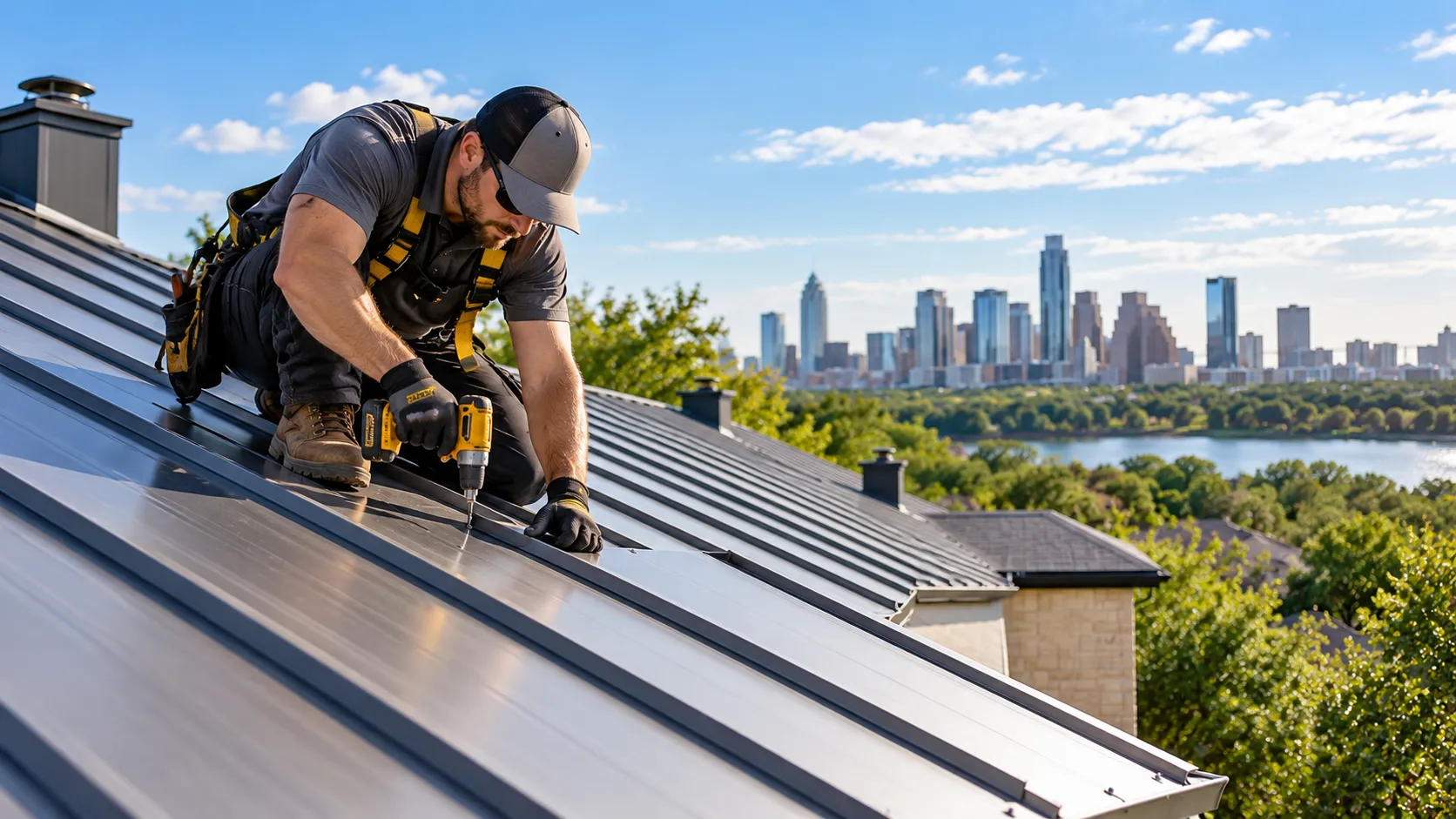
A metal roof can last for decades, but that doesn't mean every metal roofing problem requires the same solution. A leaking seam, loose fastener, damaged flashing, or dented panel may call for a targeted repair. Widespread corrosion, repeated water intrusion, or extensive storm damage can make replacement the more practical long-term investment.
For homeowners and commercial property owners in Austin, Texas, the decision comes down to three things: the condition of the existing roof, the extent of the damage, and whether repairs can restore reliable performance without creating ongoing maintenance problems.
Central Texas adds another consideration. Intense summer heat, hailstorms, strong winds, and sudden temperature changes expose metal roofing systems to conditions that can reveal weaknesses in installation, fasteners, seams, and flashing.
Understanding the difference between metal roof repair and replacement helps property owners avoid unnecessary expenses while protecting their homes or buildings.
Key Takeaways
- Metal roof repair is often appropriate when damage is localized and the surrounding roofing system remains in good condition.
- Metal roof replacement becomes worth considering when deterioration is widespread, leaks repeatedly return, or repairs no longer provide a durable solution.
- Standing seam metal roofing and exposed-fastener metal roofing systems have different maintenance requirements.
- Hail damage does not automatically mean a metal roof needs replacement; the type and severity of damage matter.
- The cost of metal roof repair or replacement in Austin depends on materials, roof design, accessibility, and the extent of the work.
- Roof It Pros serves Austin, Pflugerville, and surrounding Central Texas communities with roofing evaluations, repairs, and replacement services.
Why Metal Roofing Is Popular in Austin, Texas
Metal roofing has become an attractive option for Texas property owners looking for durability, long service life, and a roofing system capable of handling demanding weather conditions.
Unlike traditional asphalt shingles, metal roofing uses interlocking or overlapping panels designed to shed water and protect the underlying structure.
Depending on the product, coating, installation quality, and maintenance, a metal roof can remain serviceable for several decades.
Some metal roofing products also feature reflective finishes that help reduce solar heat absorption, although actual energy performance depends on roof color, insulation, ventilation, and the building's design.
For Austin homeowners comparing roofing materials, the appeal often comes down to long-term value.
A properly installed metal roof may require less frequent replacement than certain other roofing materials. However, it still needs appropriate maintenance and occasional repairs.
How Central Texas Weather Affects Metal Roofs
Austin roofing systems face a combination of prolonged heat, severe thunderstorms, hail, and seasonal temperature changes.
Metal expands and contracts as temperatures change. Roofing systems are designed to accommodate that movement, but improperly installed or deteriorating components can become vulnerable over time.
Strong winds can affect loose panels, flashing, and roof edges. Hail may dent panels or damage coatings, depending on the material and storm conditions.
These factors make installation quality and periodic maintenance important to the long-term performance of metal roofing in Austin, TX.
When Is Metal Roof Repair the Better Option?
Metal roof repair is generally appropriate when the damage affects a limited area and the rest of the roofing system remains structurally sound and serviceable.
The goal is to correct the underlying problem without replacing roofing materials that are still performing properly.
1. Loose or Damaged Fasteners
Some metal roofing systems use exposed fasteners that secure panels directly to the roof structure.
Over time, fasteners or their sealing washers can deteriorate, loosen, or become damaged.
When this happens, water may enter around the affected attachment points.
Depending on the system's condition, replacing damaged fasteners or correcting the attachment details may resolve the issue.
However, widespread fastener deterioration can indicate that more extensive maintenance is necessary.
2. Damaged Flashing Around Roof Penetrations
Flashing protects vulnerable areas where roofing materials meet chimneys, vents, walls, and other roof penetrations.
If flashing becomes loose, improperly sealed, or damaged, water can enter even when the surrounding metal panels remain in good condition.
A professional metal roof repair contractor can evaluate whether the flashing can be repaired or whether the affected components need replacement.
Addressing the actual source of the leak is more effective than applying sealant to the visible symptom without correcting the underlying condition.
3. Isolated Panel Damage
Metal roofing panels can experience localized damage from falling branches, windblown debris, or severe weather.
If the damage is limited to one or a few panels, replacement of the affected sections may be possible.
The feasibility depends on the roofing system, panel availability, fastening method, and condition of adjacent materials.
4. Minor Corrosion or Coating Damage
Certain metal roofing materials may develop corrosion when protective coatings are damaged or moisture remains in vulnerable areas.
Small areas of surface deterioration may be repairable when the underlying metal remains sound.
More extensive corrosion, especially where the metal has weakened or perforated, requires a different evaluation.
5. Localized Leaks
A metal roof leak does not automatically mean the entire roofing system has failed.
Water intrusion may originate from a specific seam, flashing detail, penetration, or damaged panel.
When the source can be identified and repaired effectively, a targeted repair may provide a practical solution.
The important question is whether the problem is isolated or part of a larger pattern.
When Should You Consider Metal Roof Replacement?
Replacement becomes a stronger consideration when the existing roof has extensive damage or repeated repairs are no longer addressing the underlying problems.
A roof may technically be repairable while replacement offers better long-term value.
Widespread Corrosion
Corrosion affecting large sections of a metal roof can compromise the material's ability to provide reliable protection.
When deterioration extends beyond isolated surface damage, replacing affected panels or the entire system may be necessary.
Recurring Leaks Across Multiple Areas
Repeated leaks can indicate broader problems with panel seams, fastening systems, flashing, or the original installation.
If repairs are repeatedly needed in different locations, the cost and reliability of continued maintenance should be compared with replacement.
Extensive Storm Damage
Severe hail or wind events can damage multiple sections of a metal roofing system.
While cosmetic dents do not always affect roof performance, punctures, displaced panels, damaged seams, and compromised attachments may require substantial repairs.
When damage affects a large portion of the roof, replacement may become more practical.
Aging or Obsolete Roofing Components
Some older metal roofing systems may use materials or panel profiles that are difficult to match or replace.
When compatible components are unavailable, localized repairs can become more complicated.
The roof's age alone does not determine whether replacement is necessary, but it should be considered alongside its condition and maintenance history.
Metal Roof Repair vs. Replacement: A Practical Comparison
| Factor | Metal Roof Repair | Metal Roof Replacement |
|---|---|---|
| Damage extent | Localized damage | Widespread or recurring damage |
| Roof condition | Surrounding system remains serviceable | Significant deterioration |
| Initial cost | Generally lower for limited work | Higher upfront investment |
| Project scope | Specific panels, seams, flashing, or fasteners | Major sections or entire roofing system |
| Long-term value | Extends the usefulness of a viable roof | Provides a new roofing system |
| Best suited for | Isolated problems with repairable components | Extensive damage or repeated system failures |
The right decision depends on the actual roof condition rather than a single factor such as age or the presence of a leak.
A roofing evaluation should identify the source of damage, determine whether repairs are technically feasible, and explain the expected benefits and limitations of each option.
Standing Seam Metal Roofing vs. Exposed-Fastener Metal Roofing
Not all metal roofing systems are constructed the same way.
Two common categories are standing seam metal roofing and exposed-fastener metal roofing.
Understanding the difference is important because each system has different installation and maintenance considerations.
Standing Seam Metal Roofing
Standing seam systems use raised seams that connect adjacent panels. Fasteners are generally concealed beneath the panels or within the seam assembly.
This design reduces the number of exposed fastening points and can provide a clean, modern appearance.
Standing seam metal roofing is often selected for residential properties and commercial buildings where durability and appearance are important.
However, proper installation remains essential.
Panel connections, clips, flashing, roof penetrations, and thermal movement must all be accounted for.
Exposed-Fastener Metal Roofing
Exposed-fastener systems use screws or other fasteners installed through the metal panels.
These systems are commonly found on certain residential, agricultural, and commercial buildings.
They can provide a cost-effective roofing solution, but the exposed attachment points require periodic attention.
Fastener seals may deteriorate over time, making inspection and maintenance important.
Which Metal Roofing System Is Better?
Neither system is automatically the best choice for every property.
Standing seam roofing may offer advantages in concealed fastening and long-term maintenance, while exposed-fastener systems may have a lower initial installation cost.
The appropriate option depends on the building's design, roof slope, budget, expected service life, and maintenance requirements.
For property owners considering metal roof installation in Austin, these factors should be evaluated before selecting a roofing system.
Can Hail Damage a Metal Roof in Austin?
Yes. Metal roofing is durable, but it is not immune to hail damage.
The effect of a hailstorm depends on hailstone size, wind speed, metal thickness, panel design, and the roofing material.
Some storms produce cosmetic dents without compromising the roof's ability to shed water.
Others may damage coatings, seams, flashing, or panels.
The distinction between cosmetic and functional damage matters when deciding whether repair or replacement is necessary.
Cosmetic vs. Functional Hail Damage
Cosmetic damage generally affects the appearance of the roof without necessarily reducing its ability to protect the building.
Functional damage affects components responsible for water resistance or structural performance.
Examples may include punctures, damaged seams, compromised flashing, or displaced panels.
A professional assessment can help determine the nature and extent of the damage.
If an insurance claim is being considered, property owners should review their policy terms, including any provisions relating to cosmetic damage.
How Much Does Metal Roof Repair Cost in Austin, TX?
Metal roof repair costs vary depending on the type of damage, roofing material, roof accessibility, and labor involved.
A small flashing repair will generally involve a different scope of work from replacing multiple damaged panels.
Factors that influence repair costs include:
- Type and thickness of metal roofing material
- Standing seam or exposed-fastener construction
- Roof height, pitch, and accessibility
- Extent of corrosion, storm damage, or water intrusion
- Availability of matching panels and components
- Condition of the underlying decking and roof structure
For metal roof replacement, costs also depend on whether existing roofing materials must be removed, whether decking repairs are required, and which new system is selected.
Because these variables can significantly affect pricing, a property-specific estimate is more useful than relying on a broad average.
Homeowners comparing metal roofing contractors in Austin should request a clear explanation of the proposed work, materials, and any conditions that could change the final cost.
What Should You Look for in a Metal Roofing Contractor in Austin?
Choosing the right contractor matters because metal roofing requires attention to details that differ from traditional asphalt shingle installation.
A contractor should understand the specific roofing system, its fastening methods, flashing requirements, and the effects of thermal movement.
When evaluating a metal roofing company in Austin, consider whether the contractor can explain the cause of the problem, identify appropriate repair methods, and provide a clear scope of work.
It is also helpful to ask about material compatibility, warranties, project timelines, and how surrounding roofing components will be protected.
A good recommendation should explain why repair or replacement is appropriate rather than assuming that a new roof is always necessary.
How Metal Roofing Works With Gutters and Drainage
A metal roofing system must direct rainwater away from the building effectively.
Because metal roof surfaces shed water efficiently, gutter sizing, placement, and drainage design are important considerations.
Improperly sized or damaged gutters may allow water to overflow near fascia, siding, and foundation areas.
For homeowners planning metal roof installation or replacement, it can be useful to evaluate the existing gutter system at the same time.
Seamless gutter installation, downspout placement, and appropriate drainage capacity may be part of a broader exterior improvement project.
This does not mean every metal roof requires new gutters.
The existing system should be evaluated based on its condition and ability to manage runoff.
Why Roof It Pros Serves Austin Metal Roofing Needs
Roof It Pros serves homeowners and commercial property owners throughout Austin, Pflugerville, and surrounding Central Texas communities.
With more than a decade of roofing experience, the company helps property owners evaluate roof damage, understand repair and replacement options, and make informed decisions about roofing projects.
Roof It Pros has a 5/5 Google rating supported by more than 80 reviews and offers free roof inspections without requiring customers to proceed with repairs.
Whether a property owner is dealing with storm damage, an aging roofing system, or considering a new metal roof, understanding the existing roof's condition is an important first step.
Frequently Asked Questions
How long does a metal roof last in Austin, Texas?
Metal roofs can last several decades, depending on the material, coating, installation quality, maintenance, and weather exposure. Some systems have longer expected service lives than others, so manufacturer specifications and actual roof condition should guide long-term planning.
Can a leaking metal roof be repaired?
Yes. Many metal roof leaks can be repaired when the source is localized and the surrounding roofing system remains in suitable condition. Common repair areas include flashing, seams, fasteners, and damaged panels.
Is metal roof repair cheaper than replacement?
Targeted repairs generally cost less upfront than replacing an entire roofing system. However, repeated repairs on a severely deteriorated roof may become less economical over time.
Does hail damage mean I need a new metal roof?
Not necessarily. Cosmetic denting does not always affect performance. Replacement may be considered when hail causes extensive functional damage or compromises important roofing components.
What is the difference between standing seam and exposed-fastener metal roofing?
Standing seam roofing typically uses concealed fasteners and raised panel connections. Exposed-fastener roofing uses attachment points installed through the panels. Each system has different installation costs, design considerations, and maintenance needs.
Can you replace individual metal roof panels?
In some cases, yes. Panel replacement depends on the roofing system, the location of the damage, the availability of matching materials, and whether adjacent components can be safely removed and reinstalled.
How often should a metal roof be inspected?
Periodic professional inspections are recommended, with additional checks after significant storms or when leaks and other warning signs appear. The appropriate schedule depends on the roof's age, design, and manufacturer guidance.
Do metal roofs need special gutters?
Not necessarily. However, gutter sizing and drainage capacity should account for the roof's surface area, slope, and runoff characteristics. A properly designed gutter system helps direct rainwater away from the property.
Does Roof It Pros offer metal roof evaluations in Austin?
Roof It Pros provides roofing evaluations for residential and commercial properties in Austin and surrounding Central Texas communities. Property owners can contact the company to discuss their metal roofing concerns and available services.
Get Help With Metal Roof Repair or Replacement in Austin, TX
A damaged metal roof does not always need to be replaced. In many cases, targeted repairs can address specific problems and help maintain the existing roofing system.
When damage is extensive or recurring, replacement may offer better long-term value.
The important step is understanding which option fits the condition of your roof.
Roof It Pros serves Austin, Pflugerville, and surrounding Central Texas communities with residential and commercial roofing services.
Contact Roof It Pros to request a free roofing evaluation and discuss your metal roof repair or replacement options.
About the Author
Brandon Miles is the CEO of Roof It Pros, a roofing company serving Austin and Central Texas. With more than a decade of experience in residential and commercial roofing, Brandon focuses on helping property owners understand roofing conditions, evaluate repair and replacement options, and make informed decisions about protecting their homes and commercial buildings.