
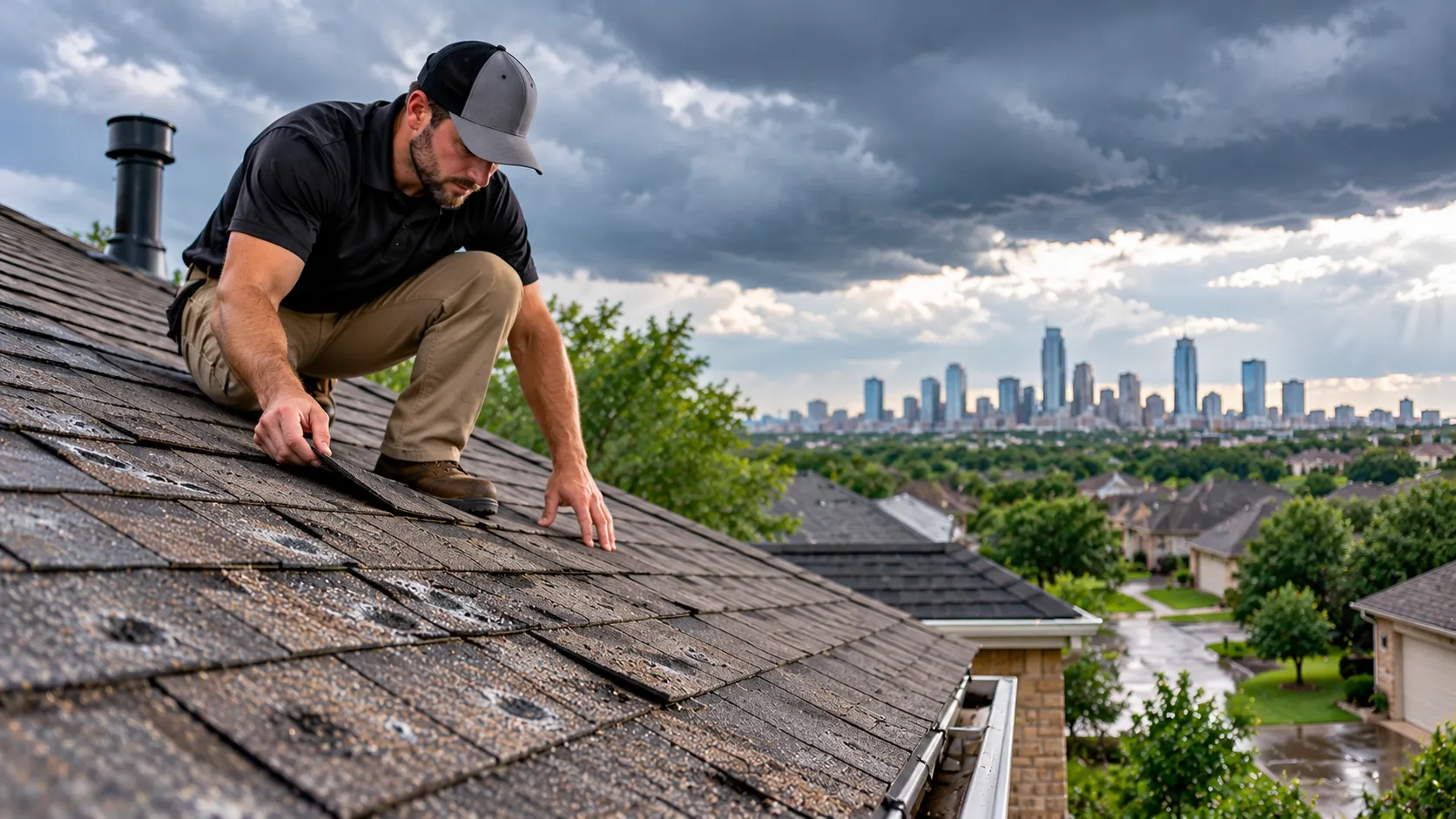
A hailstorm moves through Austin, and the next morning your roof looks exactly the way it did before. No missing shingles from the driveway, no water dripping through the ceiling, and no obvious reason to call a roofing contractor.
But appearance alone doesn't tell you whether your roof is still performing as it should.
Hail can damage asphalt shingles, metal roofing, flashing, vents, and other components without immediately causing a visible leak. In some cases, the damage is limited and can be addressed through targeted roof repairs. In others, the impact is widespread enough that roof replacement becomes the more practical option.
For Central Texas homeowners, the important question isn't simply whether hail hit the roof. It's what the storm damaged, whether those components can be repaired, and what action will protect the home moving forward.
Understanding the difference can help you avoid unnecessary replacement while also preventing smaller roofing problems from developing into more expensive repairs.
Key Takeaways
- Hail damage doesn't automatically require a full roof replacement. Localized damage may be repairable when the surrounding roofing system remains in good condition.
- Missing shingles, damaged flashing, punctures, and active leaks should be addressed promptly to reduce the risk of further water intrusion.
- Asphalt shingles and metal roofing respond differently to hail, so repair recommendations should reflect the roofing material.
- Emergency temporary tarping can help protect exposed areas when permanent repairs cannot be completed immediately.
- Insurance coverage depends on the policy, the cause of damage, and the insurer's assessment. Documentation supports the process but doesn't guarantee approval.
- Roof It Pros provides free roof inspections and roofing services throughout Austin, Pflugerville, and surrounding Central Texas communities.
What Does Hail Actually Do to a Roof?
Hail damage depends on more than the size of the hailstones.
Wind speed, impact angle, roofing material, roof age, and existing wear all influence how a storm affects a building.
Two homes on the same street can experience different levels of damage during the same storm.
One may have only minor cosmetic marks, while another has damaged shingles, exposed roofing components, or water intrusion.
Hail Damage to Asphalt Shingles
Asphalt shingles use a protective granule layer to help shield the underlying material from sunlight and weather exposure.
When hail strikes, it may dislodge granules, bruise the shingle, crack the material, or damage the underlying reinforcement.
Some impact marks are difficult to identify from the ground.
Other damage becomes more noticeable when shingles begin deteriorating or water reaches vulnerable areas.
However, not every mark on a shingle is caused by hail. Normal aging, foot traffic, manufacturing characteristics, and other conditions can produce surface changes.
A roofing professional should distinguish storm-related damage from ordinary wear before recommending repairs.
Hail Damage to Metal Roofing
Metal roofing can resist many forms of weather exposure, but severe hail can still cause damage.
Depending on the material and storm conditions, hail may produce dents, coating damage, punctures, or damage around seams and flashing.
Some dents are cosmetic and do not affect the roof's ability to shed water.
Other damage can compromise important roofing components and require repair or replacement.
For homeowners considering metal roof repair in Austin, the distinction between cosmetic and functional damage is especially important.
A dented panel doesn't automatically need replacement, but a punctured panel or compromised seam requires closer attention.
Damage to Flashing, Vents, and Roof Accessories
Hail and strong winds can also affect components that help keep water out of the building.
These include chimney flashing, pipe boots, ridge caps, vents, and roof-edge details.
A roof may have relatively little damage to its main surface while still developing a leak around one of these components.
That is why effective storm damage roof repair involves identifying the actual source of water intrusion rather than focusing only on visible shingle or panel damage.
What Should You Do Immediately After a Hailstorm?
After severe weather, homeowners should focus on safety, visible damage, and protecting the property from further exposure.
You don't need to climb onto the roof to identify warning signs.
Start with a ground-level walkthrough when conditions are safe.
Look for missing shingles, displaced roofing materials, damaged gutters, fallen branches, or debris around the property.
Inside the home, check ceilings and accessible attic areas for new water stains or signs of active moisture.
Photograph any visible damage and record the approximate date of the storm.
If water is entering the building, prioritize protecting interior belongings and arranging professional assistance.
Avoid walking on a damaged roof. Wet surfaces, unstable materials, and concealed structural problems can make roof access dangerous.
When Emergency Temporary Tarping Is Necessary
Some storm damage leaves a roof exposed before permanent repairs can be scheduled.
Missing roofing sections, major punctures, or openings caused by fallen debris may require temporary protection.
Emergency temporary tarping can help reduce additional water intrusion while a permanent repair plan is developed.
Tarping is not a substitute for repairing the damaged roofing system. It is a short-term protective measure intended to limit exposure.
If a roof has sustained significant damage, contact a qualified roofing contractor to discuss safe temporary protection and the next steps for permanent repairs.
When Can Hail Damage Be Repaired Without Replacing the Roof?
Not every hailstorm creates damage extensive enough to justify a full roof replacement.
Targeted repairs may be appropriate when the damage is limited and the remaining roofing materials are in serviceable condition.
For example, a storm may damage several shingles on one slope while leaving the surrounding roof intact.
Depending on the roof's age and condition, replacing the affected shingles may be a reasonable solution.
Other repairable conditions can include isolated flashing damage, damaged pipe boots, loose roofing components, or limited metal panel damage.
The key is determining whether the repair will restore the roofing system's protective function.
Common Types of Hail Damage Roof Repairs
Shingle replacement. Damaged or missing asphalt shingles may be replaced when compatible materials are available and the surrounding roof remains suitable for repair.
Flashing repair. Bent, displaced, or damaged flashing may require repair or replacement to restore protection around roof penetrations and transitions.
Metal roof panel repair or replacement. Localized metal roofing damage may be addressed by repairing or replacing affected components, depending on the system.
Roof leak repair. When storm damage creates a water entry point, the repair should address the source rather than simply treating the visible interior damage.
Ridge cap and roof-edge repairs. Wind and hail may affect vulnerable areas along roof peaks and edges, requiring targeted corrective work.
A qualified roofing contractor in Austin should explain which components are damaged, why a particular repair is recommended, and whether the surrounding roof can support that repair.
When Does Hail Damage Require Roof Replacement?
Roof replacement becomes a stronger consideration when storm damage is widespread or the existing roofing system cannot be reliably restored through localized repairs.
This can occur when numerous shingles are compromised, multiple roof sections have sustained functional damage, or the roof already has significant deterioration.
Aging roofing materials can also affect repair feasibility.
For example, older shingles may become brittle, making it difficult to remove and replace individual pieces without damaging adjacent materials.
Similarly, certain metal roofing systems may have panel profiles or components that are difficult to match.
Replacement decisions should consider the extent of damage, remaining service life, material availability, and expected durability of the proposed repairs.
Roof Repair vs. Roof Replacement After Hail Damage
| Consideration | Roof Repair | Roof Replacement |
|---|---|---|
| Damage | Limited to specific areas | Widespread across the roof |
| Existing materials | Generally serviceable | Extensively damaged or deteriorated |
| Initial investment | Usually lower for targeted work | Higher upfront cost |
| Project scope | Individual components or sections | Major sections or entire roofing system |
| Long-term objective | Restore affected areas | Install a new roofing system |
| Best suited for | Localized, repairable storm damage | Extensive damage or impractical repairs |
A professional assessment can help establish which approach is appropriate for the property's actual condition.
The presence of hail damage alone does not establish that replacement is necessary.
How Much Does Hail Damage Roof Repair Cost in Austin, TX?
The cost of hail damage roof repair depends on the roofing material, extent of damage, accessibility, and type of work required.
A limited shingle repair will generally cost less than replacing multiple roof sections or repairing damaged decking.
Several factors influence pricing.
Roofing Material
Asphalt shingles, standing seam metal roofing, and other roofing systems require different repair materials and installation methods.
Extent of Damage
Replacing a small number of damaged shingles involves a different scope of work from addressing extensive storm damage across multiple slopes.
Roof Height and Complexity
Steep slopes, multiple roof levels, skylights, and difficult access can increase labor requirements.
Underlying Damage
If water has reached the decking or other structural components, additional repairs may be necessary.
Material Availability
Matching older shingles or specialized metal roofing panels may affect the repair approach and cost.
Because these variables differ between properties, an on-site evaluation and written estimate provide a more useful basis for budgeting than a single average price.
Homeowners comparing roof repair contractors in Austin should ask for a clear explanation of the proposed repairs and any additional work that may become necessary.
How Do Roof Insurance Claims Work After Hail Damage?
Homeowners insurance may cover certain types of sudden, accidental storm damage, but coverage varies by policy.
Deductibles, exclusions, roof age, cosmetic damage provisions, and the cause of the loss can all affect the outcome.
A roofing contractor can help document visible damage and explain the proposed repair scope.
However, the insurance company determines coverage and claim payment under the policy.
What Documentation Should You Keep?
After a storm, it can be helpful to retain:
- The date and approximate time of the storm
- Photographs of visible damage
- Notes about when leaks or other problems first appeared
- Roofing inspection findings
- Repair estimates and related documentation
- Records of temporary protective work
This information can help establish a timeline and support communication with the insurer.
Should You File a Claim Before Getting a Roofing Estimate?
There is no single sequence that applies to every situation.
If significant damage is suspected, review your policy and contact your insurance company promptly to understand reporting requirements.
A roofing evaluation can help you understand the damage and likely repair scope, but you should not delay required claim reporting while waiting for an estimate.
Does Insurance Automatically Pay for a New Roof After Hail?
No.
The insurer evaluates the reported damage under the terms of the policy.
Some claims may involve targeted repairs, while others may qualify for more extensive work.
An inspection or contractor recommendation does not guarantee coverage or full replacement.
What About Gutters and Downspouts After a Hailstorm?
Storm damage doesn't always stop at the roof.
Gutters and downspouts may also be dented, loosened, displaced, or damaged by falling branches and windblown debris.
When gutters no longer direct water away from the home properly, runoff can affect fascia, siding, landscaping, and foundation-adjacent areas.
Homeowners should check for visibly sagging gutter sections, detached downspouts, leaking joints, and areas where water overflows during rainfall.
Depending on the condition of the existing system, gutter repair or replacement may be necessary.
For properties considering rain gutter installation in Austin, seamless gutter systems are one option worth evaluating.
They reduce the number of joints along continuous gutter runs, although correct sizing, attachment, and maintenance remain essential.
A roofing and drainage evaluation can help determine whether storm damage affected both systems.
Why Local Roofing Experience Matters After a Central Texas Storm
Severe weather often creates sudden demand for roofing services.
After a major hailstorm, homeowners may receive calls or visits from contractors offering immediate repairs or replacement.
Taking time to verify a contractor's experience, business information, insurance, and references can help reduce the risk of poor workmanship or unclear project terms.
A local roofing company familiar with Central Texas weather conditions can also provide useful context about common roofing materials and storm-related concerns.
Roof It Pros has served Austin and surrounding communities for more than a decade.
The company maintains a 5/5 Google rating across more than 80 reviews and offers free roof inspections to help homeowners understand their roofing concerns.
Whether the property needs localized roof repairs, a replacement evaluation, or temporary protection following a storm, the first priority is identifying the damage and developing an appropriate plan.
Frequently Asked Questions
Can hail damage a roof without causing a leak?
Yes. Hail can damage shingles, metal panels, flashing, and other roofing components without immediately creating visible interior water damage. Some damage may require repair even when no leak is present.
Does hail damage automatically mean I need a new roof?
No. Localized damage may be repairable. Roof replacement is generally considered when damage is extensive or the existing roofing system cannot be reliably restored through targeted repairs.
How soon should I address roof damage after a hailstorm?
Visible openings, missing roofing materials, and active leaks should be addressed promptly. Even without obvious damage, arranging an evaluation after a significant storm can help identify concerns. Review your insurance policy for applicable reporting deadlines.
Can a metal roof be repaired after hail damage?
Yes, depending on the type and extent of damage. Certain dents may be cosmetic, while punctures, damaged seams, or compromised flashing may require repairs or panel replacement.
What is emergency temporary roof tarping?
Emergency temporary tarping involves covering exposed or damaged roof areas to help limit water intrusion until permanent repairs can be completed. It is a temporary protective measure, not a permanent roofing solution.
Will homeowners insurance cover hail damage roof repair in Austin?
Coverage depends on the insurance policy and the circumstances of the loss. Deductibles, exclusions, cosmetic damage provisions, and other terms may affect the claim.
Can I repair only one section of my roof?
In some cases, yes. Sectional repairs may be appropriate when damage is localized, compatible materials are available, and the surrounding roofing system remains suitable for repair.
How do I know whether roof repair or replacement is more cost-effective?
Compare the extent of damage, age and condition of the existing roof, cost of repairs, expected service life, and likelihood of recurring problems. A professional roofing assessment can help you evaluate the options.
Can hail damage my gutters as well as my roof?
Yes. Hail and storm debris can dent, loosen, or damage gutters and downspouts. Damaged drainage components may need repair or replacement to restore proper water flow.
Does Roof It Pros provide free roof inspections in Austin?
Yes. Roof It Pros offers free roof inspections for property owners in Austin, Pflugerville, and surrounding Central Texas communities.
Get Help With Hail Damage Roof Repair in Austin, TX
A roof that looks fine after a storm may still have damage worth addressing. At the same time, finding hail damage doesn't automatically mean replacing the entire roofing system.
The right approach is to understand what was damaged, determine whether repairs can restore the roof's performance, and act promptly when exposed areas need protection.
Roof It Pros helps homeowners throughout Austin, Pflugerville, and surrounding Central Texas communities evaluate storm-related roofing concerns and understand their repair and replacement options.
Contact Roof It Pros to schedule your free roof inspection and discuss the appropriate next steps for your property.
Schedule Your Free Roof Inspection
About the Author
Brandon Miles is the CEO of Roof It Pros, a family-owned roofing company serving Austin and Central Texas. Since beginning his entrepreneurial career in 2010, Brandon has focused on quality craftsmanship, honest guidance, and helping homeowners make informed decisions about their properties. Roof It Pros provides residential and commercial roofing, storm damage restoration, and insurance claim support throughout the Austin metropolitan area.